
Digital twins in fashion: what they are, why H&M is using them, and what comes next
What is a digital twin (in fashion)?
In our world, a digital twin is a high-fidelity, licensed replica of a real person; built from photography, scans, motion references and style notes, so that the model can “work” in more places than their body can be at once. Think of it as a performer’s second self that can be directed, lit, styled and placed into scenes with the same creative intent as a shoot, but with new flexibility: different cities in a day, new hair or light without a full reshoot, and creative variations you can iterate before anyone flies.
Why H&M is using them
H&M’s own framing is simple: this is an exploration of generative AI to amplify creativity, reimagine storytelling, and connect with customers while staying human-centric.
The first set of images features digital counterparts of real models (made transparently with the models and creative team), paired with behind-the-scenes context. The idea isn’t to replace the craft of photography or the people in front of the lens; it’s to add another tool to the kit that can extend a campaign across locations, seasons and formats without starting from zero each time.
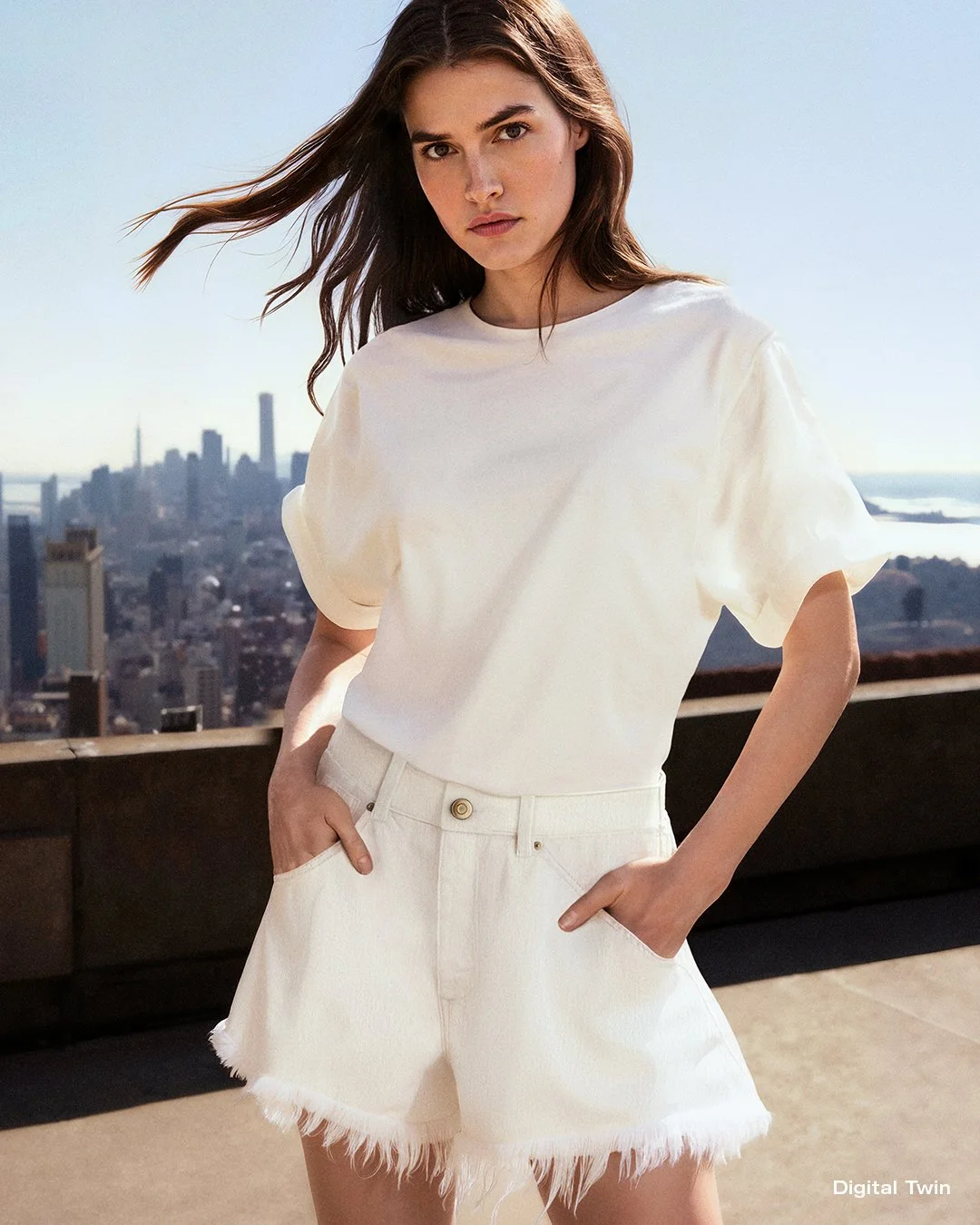
(C) H&M Digital Twin Campaign
Why this is a hot topic
Work & rights:
Models, photographers, stylists and glam teams rightly ask how compensation, credit and control work when a twin can generate new imagery tomorrow. The emerging best practice is consent + contract + control: the human signs off on how the twin is used, is paid for that use, and can say no.
Disclosure & trust:
Audiences want to know when an image is synthetic, not because they reject it, but because honesty preserves the magic. Clear labelling and BTS context help the work land well.
Representation:
Some brands first spoke about AI models as a shortcut to diversity; that drew backlash because representation isn’t a texture pack, it’s lived. Involving the actual models in creating, approving and benefiting from their twins is the meaningful line.
Quality & taste:
If a twin looks “almost right,” it breaks the spell. Direction, lighting, fabric logic and post must meet the same standard as a great shoot. Otherwise, the craft shows its seams.
Where this goes next
Hybrid campaigns by default:
A human-shot anchor moment, then twin-powered extensions for markets, weather, languages and formats = fewer reshoots, more consistency.
Spatial and AR retail:
Twins that can stand with you in a store mirror or on a product page at true scale, showing drape and movement without guessing.
Creator credits and watermarks:
Expect clearer on-image provenance and credits so audiences know who was involved and how the image was made.
Talent-owned likeness:
We’ll see more contracts that treat a twin like intellectual property licensed from the model, with revocation rights and usage windows.
Less waste, more versions:
Fewer flights and location builds for minor updates; more thoughtful variations that keep a campaign feeling alive.
The through-line is the same as any good fashion image: keep the person at the centre, tell a story with taste, and be transparent about how you made it. Used that way, twins can widen what a creative team can do without shrinking the role of the humans who give the work its soul.
